
You have probably made a budget before. Maybe several. A spreadsheet on a Sunday night, neat categories, a plan that felt honest and doable. And then by the second Friday it was gone, quietly, without any single decision to stop. If that is you, the problem was almost certainly not your willpower and not your maths. It was that the budget asked you to do a small annoying thing every day, and small annoying things do not survive a busy week.
So this is not another article about the 50/30/20 rule or cutting out coffee. Those are fine, but they are the easy part. The hard part is getting a budget to still exist in week three, and that is a habit question, not a finance one. Here is what actually keeps one alive.
Why budgets die in week two
A budget is really two jobs stitched together. One is deciding where your money should go, which you do once and it feels great. The other is recording where it actually went, which you do forever and nobody enjoys. People love the first job and quit the second. The plan was never the weak link. The daily logging was.
Think about what breaks the chain. You buy a sandwich, you tell yourself you will note it later, and later never comes because by the time you sit down you have forgotten the exact number and half the other things you bought. Miss two days and the whole thing feels inaccurate, and an inaccurate budget is easy to abandon because it stopped being useful. The failure is not dramatic. It is just friction winning, one skipped entry at a time.
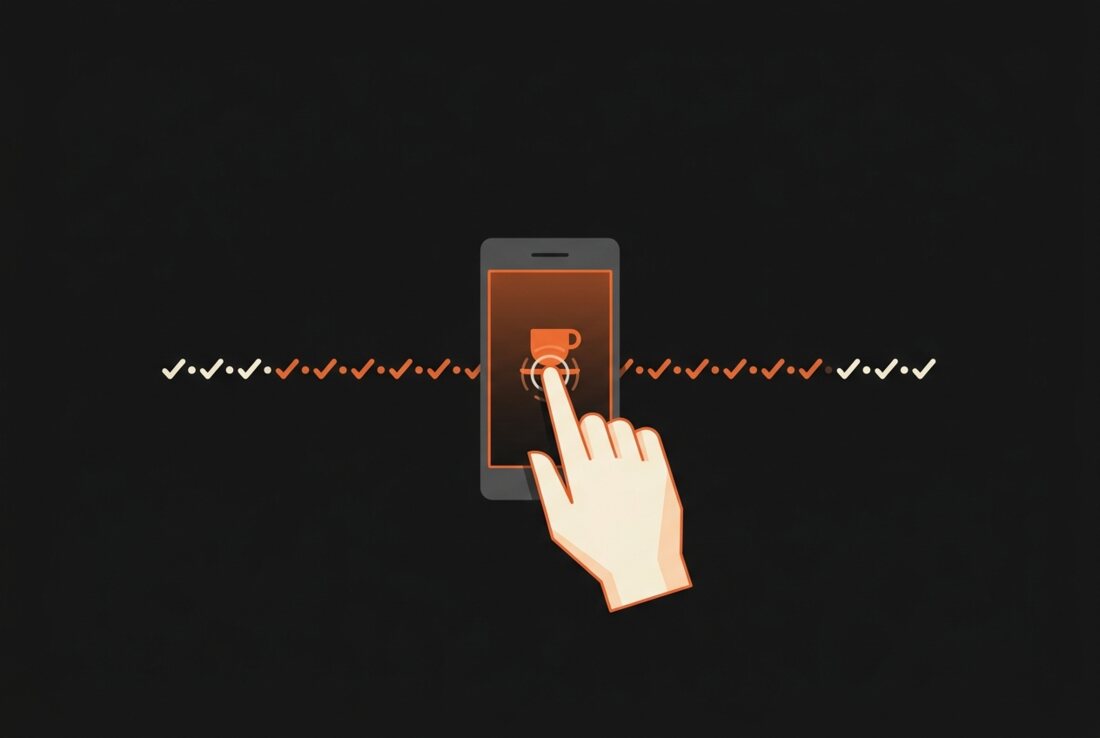
Make logging take seconds, not minutes
If there is one lever that matters more than the rest, it is the time between spending money and recording it. Get that gap down to almost nothing and the habit holds. Let it stretch and you are relying on memory, which is where budgets go to die.
The practical version of this is brutal. If logging a purchase takes six taps and a couple of menus, you will do it for about a week. If it takes a few seconds, right there while you are still standing at the till, you will actually keep going. That is not a motivation difference. It is a friction difference, and friction is the thing you can engineer away.
This is the whole reason I built Bud the way I did. Logging one expense takes about seven seconds, and you can fire it straight from the iPhone Action Button without even opening the app first. Press, type the amount, done, back to your life. The point is not that it is clever. The point is that it removes the excuse that kills every other budget.
A budget you can update in the checkout line beats a perfect spreadsheet you open once a week and dread.
Attach it to something you already do
New habits stick when they lean on old ones. Trying to remember to budget as its own separate ritual rarely works, because it competes with everything else for attention. Instead, glue the logging to the moment of spending itself. You just tapped your card or your phone to pay, so that is the trigger. Pay, then log, in the same breath, before you put your phone away.
The reason this works is that you are not asking yourself to remember anything hours later. The purchase and the record become one action. After a couple of weeks it stops feeling like a task and starts feeling like part of paying, the way checking your mirror is part of driving.
Aim for consistency, not accuracy
Here is a counterintuitive one. Perfectionism kills more budgets than overspending does. People decide that if they cannot categorise every transaction to the cent, the whole exercise is compromised, so they give up. That is backwards. A rough budget you keep for six months teaches you far more than a flawless one you keep for nine days.
Miss a day? Fine. Guessed that a coffee was three pounds when it was two eighty? Also fine. The value of a budget is the pattern it shows you over weeks, and patterns survive small errors. What they do not survive is you quitting. So give yourself permission to be approximate, because approximate and ongoing beats precise and abandoned every time.
If you have quit budgets before, do not start by fixing your spending. Start by making the recording effortless. Get the habit to hold for a month first, and the insights about your spending will show up on their own.
Let something else do the filing
The other quiet budget killer is admin. Sorting purchases into categories by hand is dull, and dull tasks get skipped. If you can hand that part off, you remove another reason to stop. Inside Bud, Buddy handles the sorting and can answer plain questions about your money, so the tidying up is not on you. You log the amount and get on with your day, and the categorising happens quietly in the background.
You do not strictly need an app for any of this. A notes file and real discipline can work. But be honest about which parts you personally skip, and then remove those parts. For most people the skipped part is the daily logging, which is exactly the part software is good at making painless.
Check in weekly, not daily
Logging should be daily and instant. Reviewing should not be. Staring at your budget every single day is a fast route to either anxiety or boredom, and both lead to quitting. A short weekly glance is plenty. Once a week, look at where the money actually went, notice one thing that surprised you, and adjust if you feel like it. That is the entire ritual.
Keeping those two rhythms separate is what makes budgeting sustainable. The daily bit is tiny and automatic. The thinking bit is small and occasional. Neither one is a big enough task to dread, which is the whole trick, because you cannot dread your way to a habit that lasts.
The short version
Sticking to a budget is not about being more disciplined than you were last time. It is about designing the job so it needs less discipline. Shrink the logging to seconds, attach it to the act of paying, forgive yourself for being approximate, offload the admin, and review just once a week. Do that and the budget stops being a project you keep restarting and turns into a background habit you barely notice. That is the version that actually sticks, and it is a lot closer than the last few attempts made it feel.
Track your money in seconds, not spreadsheets.
Bud is free to download, built for iPhone, and never asks for a bank login.
